Exercises To Alleviate Lower Back Pain


Article at a glance
Discover our comprehensive list of easy exercises tailored specifically for seniors who battle lower back pain. These exercises will help promote mobility, flexibility, and strength, while offering gentle yet effective solutions to alleviate discomfort and improve overall well-being.

The Muscles That Make Up the Back
The back is primarily composed of several major muscle groups, including the trapezius, latissimus dorsi, rhomboids, erector spinae, and the smaller intrinsic muscles such as the teres major and minor. The trapezius spans the upper back and neck, aiding in shoulder movement and neck stabilization. The latissimus dorsi, located on the sides of the back, supports arm movement and assists in activities like pulling and lifting. Rhomboids, positioned between the shoulder blades, contribute to shoulder stability and posture. The erector spinae muscles run along the spine’s length, providing support and enabling upright posture and back extension. These muscles work together to support the spine, facilitate movement, and maintain posture.
List of Easy Exercises For Lower Back Pain For Seniors
Lower back pain can significantly impact the quality of life for seniors, but incorporating simple exercises into your routine can help alleviate discomfort and improve flexibility and strength. Here are five easy exercises specifically designed to target lower back pain below:
1. Pelvic Tilts
Pelvic tilts help strengthen the muscles in the lower back and abdomen, improving stability and flexibility in the lumbar spine.
Muscles Worked: Lower back muscles, and abdominal muscles.
How to Do:
- Lie on your back with your knees bent and feet flat on the floor.
- Tighten your abdominal muscles to flatten your lower back against the floor.
- Hold this position for 5 seconds, then release.
- Repeat for 10–15 repetitions.

2. Cat-Cow Stretch
The cat-cow stretch promotes spinal flexibility and mobility, relieving tension in the lower back muscles.
Muscles Worked: Lower back muscles, abdominal muscles, spinal erectors.
How to Do:
- Start on your hands and knees, with your wrists directly under your shoulders and knees under your hips.
- Inhale as you arch your back, lowering your belly towards the floor and lifting your head and tailbone towards the ceiling (cow pose).
- Exhale as you round your spine, tucking your chin to your chest and drawing your belly button towards your spine (cat pose).
- Repeat the sequence for 8–10 cycles.

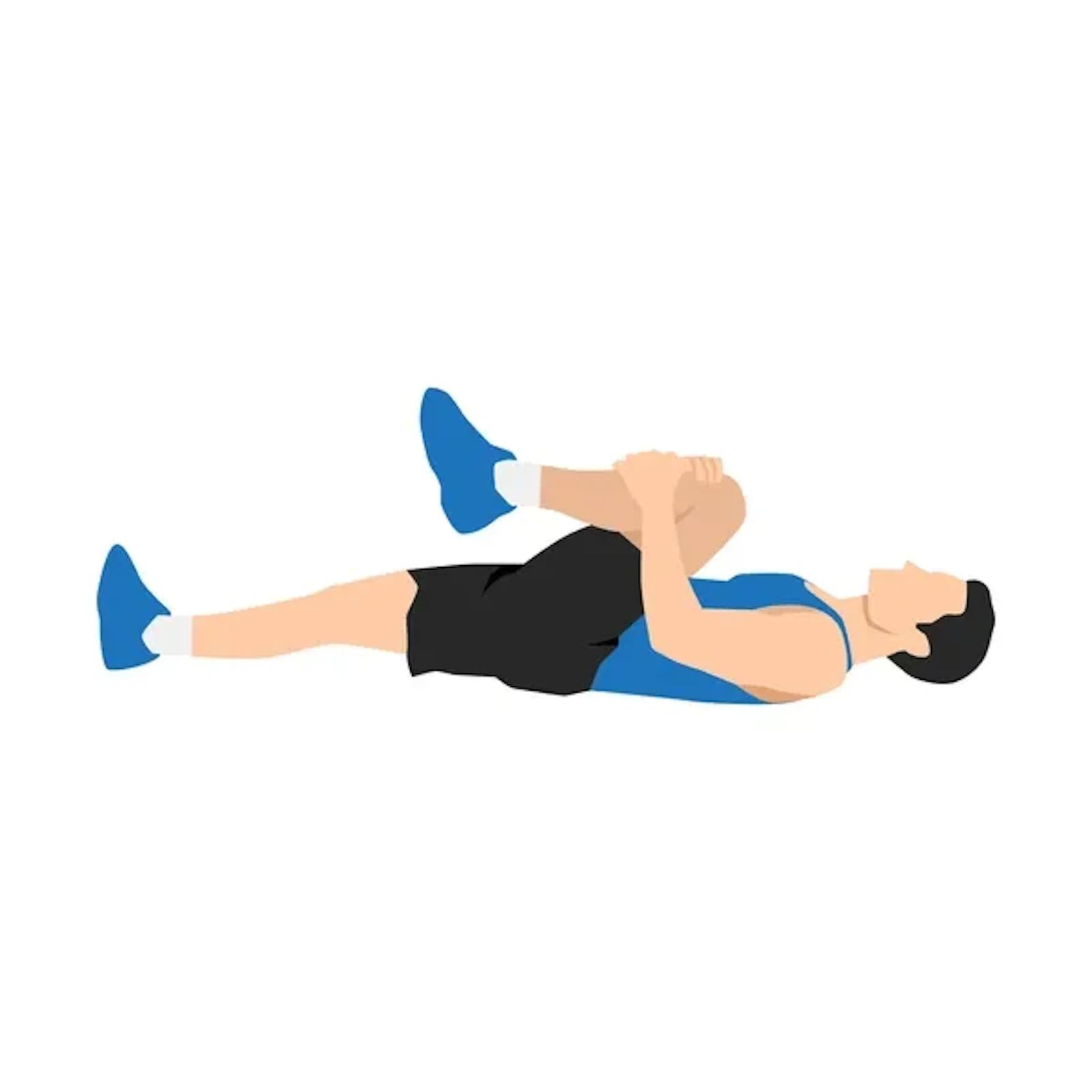
3. Knee-to-Chest Stretch
This stretch helps release tension in the lower back and hip flexors, promoting relaxation and flexibility.
Muscles Worked: Lower back muscles, hip flexors.
How to Do:
- Lie on your back with your legs extended and arms by your sides.
- Bend one knee and hug it towards your chest, keeping the opposite leg flat on the floor.
- Hold the stretch for 15–30 seconds, feeling a gentle pull in the lower back and buttocks.
- Switch legs and repeat on the other side.
4. Seated Spinal Twist
The seated spinal twist stretches the muscles along the spine, promoting spinal mobility and relieving tension in the lower back.
Muscles Worked: Lower back muscles, obliques, spinal erectors.
How to Do:
- Sit on a chair with your feet flat on the floor and spine tall.
- Twist your torso to one side, placing one hand on the opposite knee and the other hand on the back of the chair.
- Hold the twist for 15–30 seconds, feeling a gentle stretch along the spine.
- Return to the center and repeat on the other side.

5. Bridge Exercise
The bridge exercise strengthens the muscles in the lower back, glutes, and hamstrings, promoting spinal stability and alignment.
Muscles Worked: Lower back muscles, glutes, hamstrings.
How to Do:
- Lie on your back with your knees bent and feet flat on the floor, hip-width apart.
- Press through your heels as you lift your hips towards the ceiling, engaging your glutes and core.
- Hold the bridge position for 10–15 seconds, then lower back down to the starting position.
- Repeat for 8–10 repetitions.
Incorporate these exercises into your daily routine to help alleviate lower back pain and improve overall mobility and strength. Remember to listen to your body and consult with a healthcare professional before starting any new exercise program, especially if you have existing medical conditions or concerns.

The Muscles That Make Up The Core
The core muscles encompass a group of muscles crucial for stability, posture, and movement throughout the body. These muscles include the rectus abdominis, responsible for flexing the spine and maintaining abdominal tension, the obliques, which aid in rotation and lateral flexion of the trunk, the erector spinae group, supporting the spine’s extension and rotation, and the deep stabilizing muscles such as the transverse abdominis and multifidus, which provide foundational support to the spine and pelvis.

Core Exercises For Seniors With Back Pain
Maintaining a strong core is essential for seniors to support overall stability, balance, and mobility, thereby reducing the risk of falls and improving daily functionality.
Bridges: Is a core exercise that strengthens the lower back, glutes, and abdominal muscles by lifting the hips off the ground in a bridge position.
Muscles Worked: Lower back, glutes, and abdominal muscles.
How to Do:
- Lie on your back with your knees bent and feet flat on the floor.
- Lift your hips off the ground, forming a straight line from shoulders to knees.
- Hold for a few seconds, then lower back down.
Planks: Planks are a core exercise beneficial for seniors as they engage the abdominals, back, and shoulder muscles by holding a push-up position, promoting stability, improving posture, and preventing lower back pain.
Muscles Worked: Abdominals, back, and shoulder muscles.
How to Do:
- Start in a push-up position with elbows bent and forearms resting on the ground.
- Keep your body in a straight line from head to heels, engaging your core.
- Hold this position for as long as comfortable, focusing on breathing steadily.
Opposite arm and leg raise:
Muscles Worked: Lower back, glutes, shoulders, and core muscles.
How to Do:
- Begin on all fours with your wrists under your shoulders and knees under your hips.
- Lift your right arm forward and left leg backward until they are parallel to the ground.
- Hold for a moment, then return to the starting position and repeat with the opposite arm and leg.
Russian Twists: Opposite arm and leg raises are a core exercise particularly helpful for seniors, targeting the lower back, glutes, shoulders, and core muscles by lifting one arm and the opposite leg off the ground while on all fours, enhancing balance, stability, and overall functional mobility.
Muscles Worked: Obliques, lower back, and core muscles.
How to Do:
- Sit on the floor with knees bent and feet lifted off the ground.
- Lean back slightly, keeping your back straight.
- Twist your torso from side to side, touching the ground beside you with each twist.
Seated Leg Raises: Seated leg raises are a core exercise suitable for seniors, focusing on the lower abdominal muscles, hip flexors, and core, as they lift one leg at a time while seated on a chair, promoting core strength, stability, and improved mobility for daily activities.
Muscles Worked: Lower abdominal muscles, hip flexors, and core.
How to Do:
- Sit on the edge of a chair with your back straight and hands resting on the sides.
- Lift one leg up until it is parallel to the ground.
- Hold for a moment, then lower it back down and repeat with the other leg.

Benefits of Stretching After Working Out
Stretching is paramount for seniors after core workouts as it helps maintain flexibility, mobility, and overall joint health. After engaging in core exercises, which often involve movements that can tighten and contract the muscles, stretching assists in lengthening and relaxing these muscles, reducing the risk of stiffness and soreness. Additionally, regular stretching aids in improving circulation, which can alleviate muscle fatigue and promote faster recovery. For seniors, maintaining flexibility is vital for performing daily activities with ease and reducing the likelihood of injuries, making post-core workout stretching an essential component of their fitness routine.
Sources
- https://www.healthline.com/health/back-pain/stretches-for-seniors#gentle-twist
- https://www.mayoclinic.org/healthy-lifestyle/adult-health/in-depth/back-pain/art-20546859
- https://www.aarp.org/health/conditions-treatments/exercises-for-lower-back-pain/
- https://www.health.harvard.edu/staying-healthy/the-best-core-exercises-for-older-adults
- https://www.henryford.com/blog/2023/09/back-pain-core-exercises