10 Ideas for Making Friends in Retirement

Article at a glance
- Loneliness is a growing health concern in the United States, with one-fourth of adults over 65 experiencing social isolation.
- Retirement often triggers loneliness. When we retire, we lose the social relationships we had at work, which often leaves a void to be filled.
- Fortunately, there are many ways to make friends after retirement. From joining a community group to spending time in public spaces, retirement offers many opportunities to create new friendship groups.

Many older Americans experience loneliness, either from friends moving or passing away, or from a lack of workplace interaction once they retire. In fact, the CDC reports that one-fourth of adults over 65 suffer from social isolation.
However, loneliness is not a default state in retirement. There are many ways to make new friends as you transition to a work-free lifestyle. Continue reading for seven of the best ways to make friends in retirement.
Social Struggles in Retirement
We spend about forty hours a week working for most of our lives. Often that time is full of conversations with coworkers and interactions with clients or customers, both of which can be beneficial to our social health and well-being. After retirement, we gain those forty hours back but lose some of our social interactions in the process.
Research shows a higher likelihood of feeling isolated or lonely after retirement, especially for men. A 2023 study theorized that this loneliness stems from losing peripheral social ties to acquaintances and coworkers we see daily.
Fortunately, researchers are hopeful that with intentional action, an older adult can build up a strong social network and create peripheral social connections with neighbors, friends in retirement communities, and others.
Loneliness and Health
Healthy living initiatives often focus on movement and nutrition and while these factors are important, they aren’t the only ones impacting overall health. According to a landmark 2020 study, loneliness has the same impact on health as smoking 15 cigarettes a day.
Loneliness often contributes to cognitive, physical, and mental health issues, including:
- Depression
- Anxiety
- Alzheimer’s disease
- Dementia
- Heart disease
- Parkinson’s disease
- High blood pressure
- Weakened immune system, increasing the likelihood of physical illness
The risk of these health impacts can be lowered through a thriving social life and making friends. Even making one new friend or joining an established group to try out a new hobby may have a huge impact on someone’s social health.
10 Ways to Make Friends in Retirement
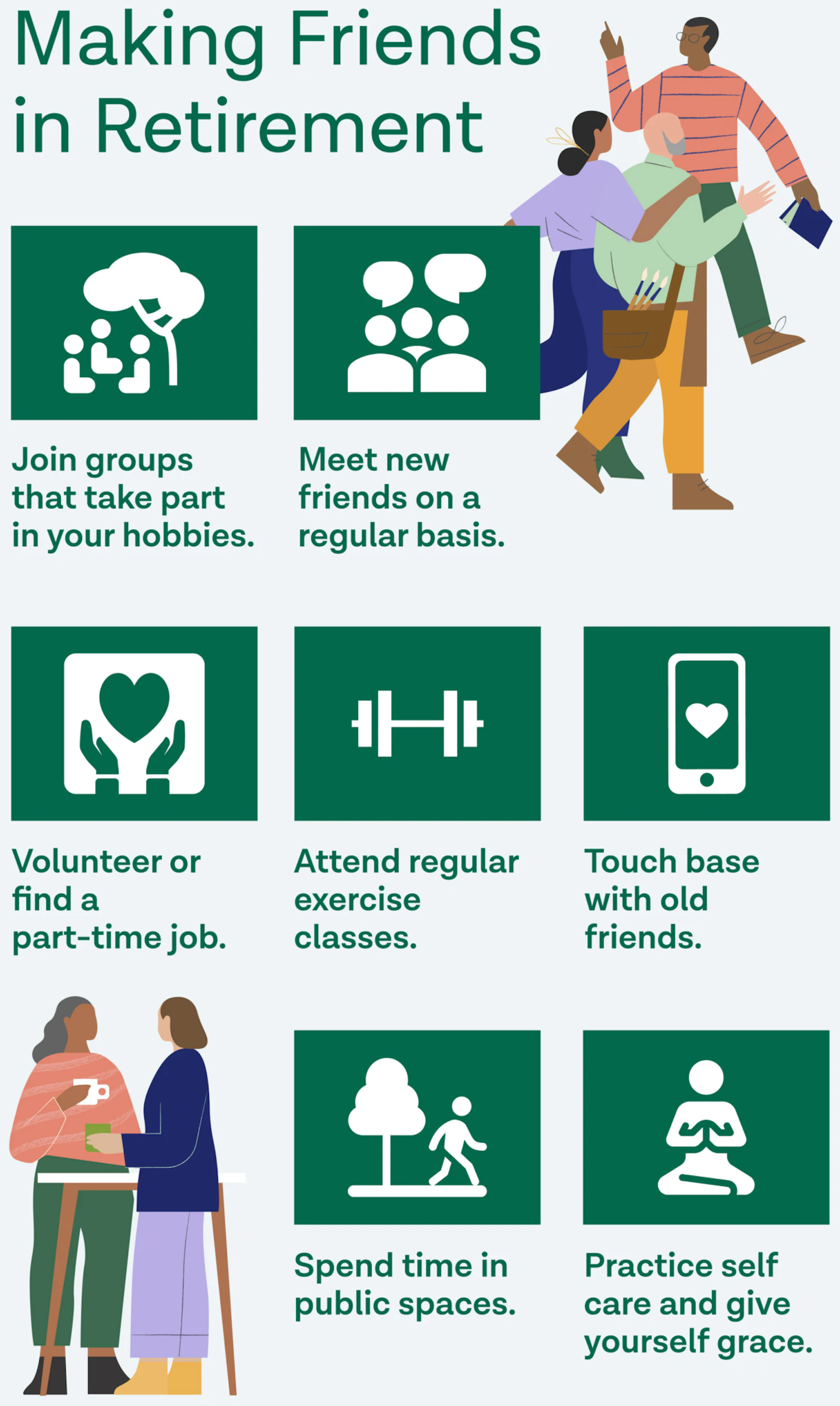
1 | Find Groups that Align With Your Hobbies
Those who want to make new friends should consider joining established groups or making time for social activities. Many community centers, local senior centers, religious organizations, and small businesses bring together people with shared interests for regular meetups. If someone lives in a retirement community, there may be groups on-site for different hobbies, to improve physical and mental health, and to meet other residents.
To increase your chance of cultivating meaningful relationships, join groups and local clubs that align with your interests. Popular groups to join include:
- Religious small groups, such as a Bible study or Halaqa group
- Community garden clubs
- Walking clubs
- Hiking groups
- Neighborhood associations
- Game night clubs
- Classes around a specific interest, such as dance classes or photography
- Discussion groups, such as book clubs
If struggling to find groups or in-person events, turn to the internet. Many local organizations and online communities post social events online. When starting online research, here are some websites to explore:
- MeetUp: this free online platform is a place for local organizations to post about different events.
- Local Facebook Groups: for those with a Facebook account, search for groups in the area that align with personal interests, or scroll through the “events near you” section.
- BumbleBFF: to meet people one-on-one, consider joining Bumble BFF, an app that matches individuals with similar interests.
2 | Set Aside Time for Regular Meetups
Meaningful friendships require time, energy, and effort to build and maintain. If someone is looking for new friends, they may want to set aside specific time for one-on-one or group activities. For retirees, this could be one hour a day or a single day, with the intention of meeting someone new or trying a group activity.
When investing time and energy, the key is to be intentional. Research local events aligned with your interests and add them to your calendar ahead of time. Social media groups on Facebook, the newspaper, and community boards are great places to find events that attract like-minded people.
If you plan your week in an agenda or diary, set aside time to find friends and maintain friendships with older friends. In that time, older adults can:
- Attend weekly meetups for a new group, such as an event for dog owners or a fundraiser hosted by local charities. Meetups that happen regularly are also a great way to see the same people and keep regular interaction going, such as other dog owners or those who are passionate about the same causes.
- Stay connected with older friends and try to see them on a regular basis when possible. If they live far away, consider starting a private social network group where everyone can share life updates.
- Research free events, such as local markets, festivals, or parades, where there could be potential friends, and add them to your calendar.
3 | Volunteer or Find a Part-time Job
At work, many connections are forged or strengthened when collaborating on projects. A great way to get that same camaraderie is through volunteering. Volunteers make a positive impact on their community and often work with others who share their passion for a specific issue.
Some common places that often need volunteers include:
- Soup kitchens
- Thrift stores like Salvation Army
- Hospitals (to cheer up patients)
- Schools with limited resources
- Community centers
- Public libraries
- Animal shelters
- Intergenerational groups
If unsure how to find a group to volunteer with, start by brainstorming the causes that matter to you. Next, Google those causes and the name of your hometown and see what organizations pop up. Nonprofits should list their contact information on their website, making it easy to call or email them.
Others may find it meaningful to take up a part-time job during their retirement years. In these roles, many older adults find new people to be friends with and feel less socially isolated. However, these jobs often require a larger commitment than volunteer opportunities.
4 | Join an Exercise Group
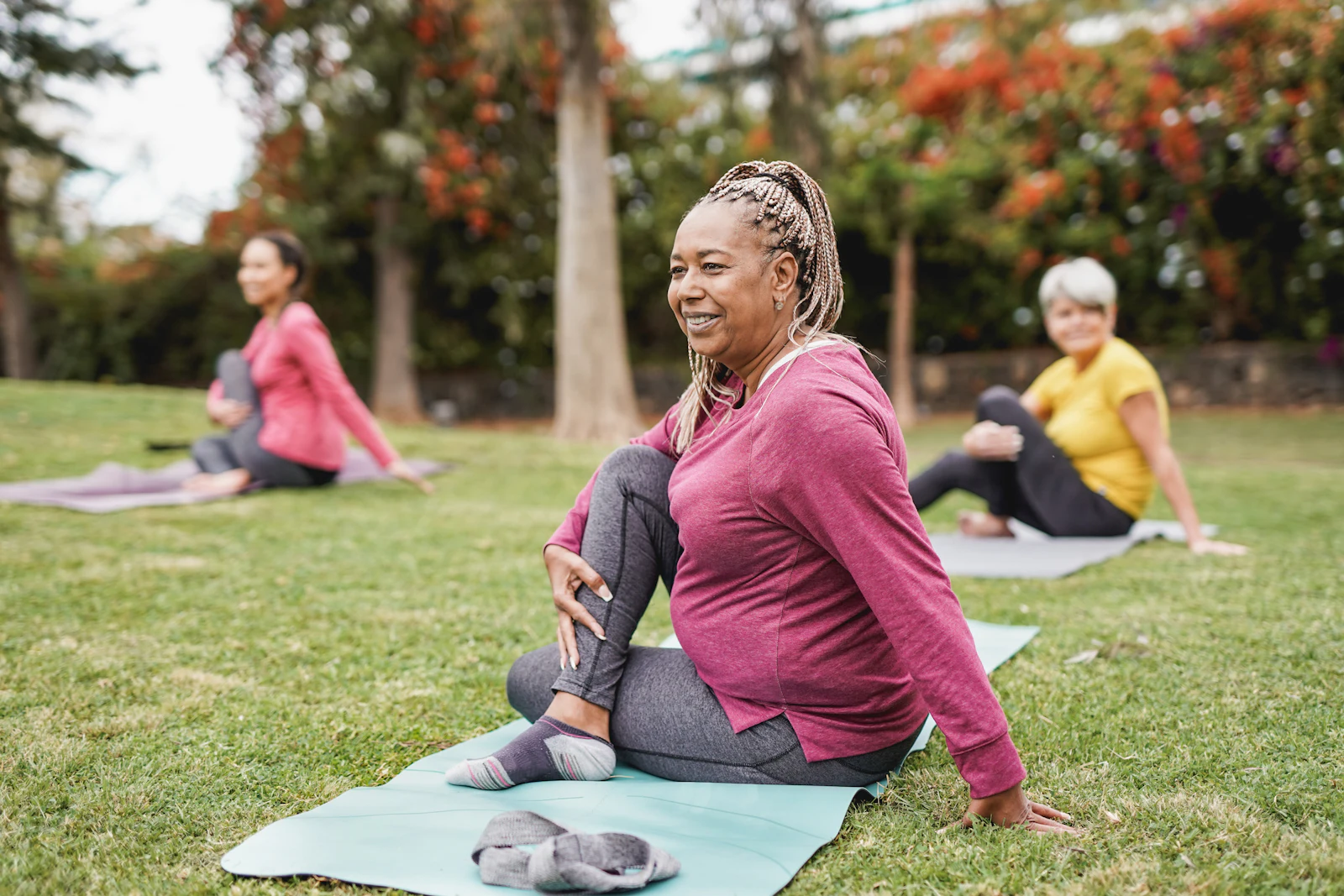
What’s better than improving social health or physical health? Improving both at the same time. Exercise groups allow senior citizens to make friends and stay fit. Plus, the accountability of working out with others makes health goals easier to achieve.
For those with gym memberships, ask if there are any exercise classes included. If someone doesn’t have a gym membership, they can ask a community center if they host exercise classes.
When exploring different workout options, consider low-impact options (ex. exercises in water) and avoid workouts with heavy weights or high impact (ex. running or HIIT), unless already accustomed to more extreme exercises.
Some excellent group fitness classes for older adults include:
- Chair yoga
- Water aerobics
- Swimming
- Pilates, especially when done through a medical fitness center
- Chair workouts
Note: Those with lower mobility can take classes and stay physically active as well. For more information on activities lower mobility adults can take advantage of, visit this resource.
5 | Reconnect with Old Friends
After retirement, we often lose touch with friends. Some may move closer to grandchildren while others are coworkers we no longer see at work. If someone feels lonely and needs a social boost, calling or texting an old friend is a great place to start.
To make reaching out easier, don’t wait for a perfect time. Instead, send a message today. If confused about what to say when reconnecting, here are some ideas:
- I enjoyed your recent Facebook post. Would love to catch up sometime soon.
- There’s a new class at the community center I want to try. Want to join me?
- You crossed my mind recently. How are things going?
- I was in your neck of the woods recently and thought of you. How have you been?
- I just wanted to say I’m thinking of you. How is everything going?
Reconnecting can also take time, so it’s good to have healthy expectations. It may take someone time to respond, and the response may be small, not life-changing, but it’s still worth it to reach out and try to rekindle that relationship.
6 | Practice Self-Care
When finding friends, it’s important to be a good friend to yourself. When someone practices self-care, they show up to social interactions confident and ready to put their best foot forward.
Meaningful self-care ideas include:
- Reading a good book
- Staying active
- Practicing mindfulness
- Exercising the brain with puzzles or foreign language lessons
- Spending time in nature
For more ideas on self-care and how to incorporate your social health into a self-care routine, click here.
7 | Spend Time in Public Spaces
When we retire, we often maintain relationships with close friends and family. What is often lost is peripheral social ties. These are relationships we have with acquaintances who aren’t friends, but who we interact with daily. For workers, this often includes coworkers they chat with during a coffee break or a client whom they meet up with once a month to review their accounts.
To maintain peripheral social ties, spend time in public spaces. Public spaces include:
- A gym where someone says hi to those who exercise at the same time
- A park where someone takes a daily walk
- A library to check out books and attend literary events
For stronger peripheral ties, frequent public spaces regularly, such as drawing in the park every day at 10 am or attending a weekly poetry reading at a nearby bookstore once a month. Along with developing peripheral ties, spending time in public spaces may lead to genuine friendships with others who enjoy the same hobbies.
Making friends in retirement and keeping up with them can be daunting, but it’s not impossible. By intentionally filling your time with activities, groups, and hobbies you enjoy, you’ll begin to attract a community of like-minded friends.
8 | Join a Support Group
As we age, there are many life changes we face that can make us feel alienated from others. From chronic health issues, loss of loved ones, or mental health struggles, it can be difficult to maintain close connections with other people when we feel no one else understands what we’re going through.
However, these struggles often happen to others, too. Finding support groups, online or in-person, with others who are dealing with the same life changes, can be a great way to find support, reassurance, and even close friendships.
Some places that may offer support groups include:
- Senior centers
- Churches or religious institutions
- Health care facilities
- Social media groups or websites
9 | Get Out of Your Comfort Zone
While it can be intimidating to do something different, you will have more luck finding new connections if you are willing to put yourself out there. This can look like trying a new hobby or activity, striking up a conversation with someone at an organized event you’re attending, accepting invitations when they are offered, or inviting someone to join you in one of your interests.
This can feel challenging at first, but over time, the more open and willing you are to connect with others, the greater your chances of building friendships with people you wouldn’t have expected.
10 | Show Interest in Others
Meaningful connections are built not just through meeting others, but by becoming invested in them. It’s one thing to attend an event or class, but another to form bonds that will last in the long term.
When working towards making new friends, take a genuine interest in what they say. Pay attention to changes in their daily lives during your conversations. Be willing to ask how they are doing and show emotional support when you’re able to.
Of course, don’t feel pressured to overwhelm yourself or others when forming new friendships. Go at your own pace, and know that making new friends takes time.

FAQ
How do 60-year-olds make friends?
60-year-olds can make friends in many ways. Joining a community group, exercise class, or volunteering is a great way to meet those who have shared interests. If you're confused about where to start, reach out to a local community center and see what they offer.
What is the hardest part of retirement?
For many, social isolation and loneliness are the hardest part of retirement. When we work, we see the same coworkers each weekday, providing a chance to connect. After retirement, we don’t have a regular working routine, which can be isolating. However, there are many ways to fill the social void retirement creates, such as joining a community group or volunteering.
How do I stop being lonely after retirement?
If someone feels lonely after retiring, they may need more activities or hobbies in their schedule. Consider reaching out to a local community center or religious organization and asking about what activities or groups they host. Someone can also brainstorm hobbies or causes they are passionate about and find aligned volunteering opportunities or community events.
Sources
- https://pmc.ncbi.nlm.nih.gov/articles/PMC10326722/
- https://pmc.ncbi.nlm.nih.gov/articles/PMC8465952/
- https://pmc.ncbi.nlm.nih.gov/articles/PMC10735337/
- https://pmc.ncbi.nlm.nih.gov/articles/PMC9288177/
- https://pmc.ncbi.nlm.nih.gov/articles/PMC10326722/
- https://pmc.ncbi.nlm.nih.gov/articles/PMC7452903/
- https://pmc.ncbi.nlm.nih.gov/articles/PMC10326722/
- https://karger.com/ger/article-abstract/66/3/286/148324/The-Increasing-Importance-of-Friendship-in-Late?redirectedFrom=fulltext
- https://healthtalk.unchealthcare.org/how-to-exercise-with-limited-mobility/
- https://www.hhs.texas.gov/sites/default/files/documents/reconnecting-with-someone.pdf