15 High-Fiber Foods to Boost Overall Health


Article at a glance
- Fiber is an essential part of a healthy diet at any age, but most of us don’t get enough.
- Maintaining a healthy weight, reducing the risk for type 2 diabetes and heart disease, and strengthening the gut microbiome are some of fiber’s many benefits.
- Fiber-rich foods include legumes, vegetables, fruits, and whole grains.

Eating fiber keeps us full for longer and regulates our digestive system. It’s also great for gut health, heart health, and mental health. Despite these benefits, 90% of women and 97% of men don’t get enough fiber from their diet. Often, this is due to confusion around what fiber is, what foods are high in fiber, and how much fiber is necessary. This article answers these three questions by providing 15 high-fiber foods and easy ways to boost fiber intake.
What Is Fiber?
Fiber is proof that carbs are not the enemy to a healthy diet. While the body turns most carbs into sugar, it cannot do that with fiber because it is harder to break down. In fact, unlike other nutrients, this indigestible carbohydrate passes through our intestines without much of it being absorbed. Because it moves through the body undigested, fiber helps someone feel full faster and longer. It also helps “clean out” the colon and gut, keeping digestion regular.
There are two types of fiber, each with different benefits:
- Soluble fiber: breaks down into a gel in the stomach. Soluble fiber is what keeps us full longer because it slows digestion.
- Insoluble fiber: remains whole as it passes through the intestines. Insoluble fiber is often associated with keeping the colon and gut clean and healthy.
While some companies add fiber to processed foods, such as guar gum, or sell fiber supplements, like psyllium husk, fiber also exists naturally in legumes, fruits, vegetables, and whole grains. Many of these food groups contain both types of fiber.
Recommended Daily Fiber
Too little fiber can lead to poor gut health and constipation. Too much can lead to bloating, gas, and cramps. The Dietary Guidelines for Americans offers recommended daily fiber intakes, depending on age and gender:
- Women 19–30: 28 grams
- Men 19–30: 34 grams
- Women 31–50: 25 grams
- Men 31–50: 31 grams
- Women 51+: 22 grams
- Men 51+: 28 grams

Health Benefits of Fiber
Fiber has a plethora of benefits, and the one we most commonly focus on is that it helps us feel full faster and for longer. That fullness feeling (and some of fiber’s other traits) impacts our health in multiple ways, including:
- Weight Maintenance: fiber keeps you full for longer periods of time, making it a great addition for those trying to maintain or lose weight.
- Heart Disease Prevention: because fiber lowers cholesterol levels, it strengthens cardiovascular health, making it essential to a heart healthy diet.
- Lowered Risk of Type 2 Diabetes: fiber helps control blood sugar levels, which can be key to preventing or managing type 2 diabetes. In fact, one 2024 study found that when participants with diabetes ate the recommended amount of fiber for their age and gender, premature mortality risk decreased by 10–48%.
- Digestive System Regulation: fiber can clean out the digestive tract, ensuring someone is regular (and not constipated).
- Improves the Gut and Immune System: the gut ferments fiber and turns it into short-chain fatty acids, an energy source that boosts gut microbiome health and the immune system. Fiber may have anti-inflammatory effects that reduce chronic inflammation.
- Prevents Constipation: due to its mild laxative effect, fiber can help ensure regular bowel movements and prevent constipation (when you have fewer bowel movements than normal).
Thanks to fiber’s role in the gut, some researchers suggest fiber may also improve brain health and prevent colon cancer, though more research is required to confirm these benefits.

15 High-Fiber Foods to Try
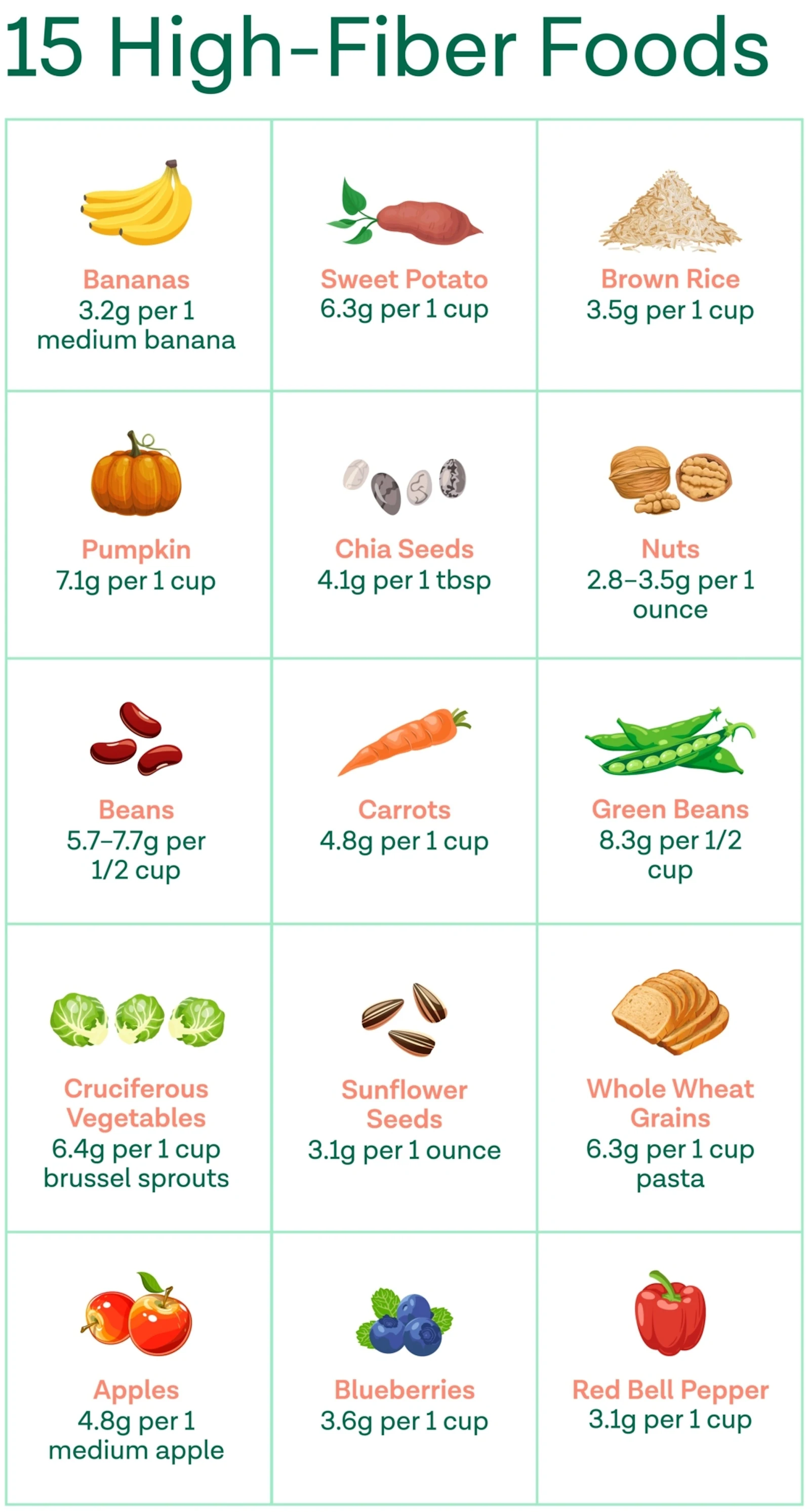
Generally, fiber is found in legumes, fruits, vegetables, whole grains, nuts, and seeds. But lots of foods fall into these groups, making it difficult to know which ones have the most fiber. Below, we’ve compiled a non-exhaustive list of essentials for a high-fiber diet.
Sunflower Seeds
A one-ounce serving of sunflower seeds contains about 3.1 grams of fiber. Along with fiber, sunflower seeds contain vitamins, flavonoids, and mineral elements that are great for our health. In fact, these seeds are anti-inflammatory and antioxidant, with studies suggesting they can lower cholesterol, maintain healthy blood pressure, and protect the skin.
Sunflowers can be consumed on their own, raw or roasted. They can also be added to yogurts, trail mixes, salads, and other dishes.
Sweet Potatoes
Sweet potatoes are an excellent source of fiber. They’re also anti-inflammatory, help improve cardiovascular health, and might be anti-cancerous.
If eating sweet potatoes for fiber intake, remember that one cup of sweet potatoes has 6.3 grams of fiber – when eaten with the skin on. In fact, any type of potato has a higher fiber content when consumed with the skin.

Green Peas
Green peas are an excellent source of fiber, with approximately 8.8 grams of fiber per cup. They also provide other health benefits, such as helping to stabilize blood sugar levels and supporting heart health.
Brown Rice
With 3.5 grams of fiber in every cup, brown rice is a great option and works with most diets. Plus, it’s an easy swap to replace white rice. Switch to brown rice or wild rice for the next stir-fry or rice-based dish.
Green Beans
As a part of the legume family, green beans are a great source of fiber. A half-cup cooked has about 8.3 grams of fiber. The safest way to eat green beans is to cook them first. Once cooked, they can be enjoyed on their own or in a larger dish, such as green bean minestrone.
Chia Seeds
Adding a tablespoon of chia seeds to a yogurt or granola provides 4.1 grams of fiber. They also contain antioxidants and protein, making these seeds an easy way to knock out multiple essentials to a healthy diet.
Whole Wheat Grains
Grains are an essential part of a healthy diet, though whole grains may be more beneficial, thanks to their higher concentration of fiber. There are some easy ways to sneak more whole grains into everyday life, including:
- Make a sandwich on whole wheat bread instead of white bread
- Switch to whole-wheat pasta
- Buy whole wheat tortillas for the next taco night
- Prepare cooked quinoa instead of white rice
Beans
Beans are a great plant-based food to eat at lunch or dinner. Popular options that are high in fiber include kidney beans (5.7 grams of fiber per half cup), pinto beans (7.7 grams per half cup), and black beans (7.5 grams per half cup). Include them in salads, soups, or as a side dish in your next meal.
Carrots
Carrots are best known for preserving eye health. While they can help maintain good vision, they’re also a great source of fiber (4.78 grams per cup). Plus, a 2023 study suggests they may prevent multiple types of cancer, including breast, lung, prostate, and pancreatic cancer.
Carrots can be eaten raw or cooked, on their own, with dip, or in a larger dish, such as a carrot soup or a lentil dhal.
Pumpkin
Pumpkins aren’t just for Halloween– they can be enjoyed any time of the year. Pumpkin and pumpkin seeds are high in fiber. Both can be eaten raw or cooked, in a dish or alone as a snack. Every ounce of pumpkin seeds has 5.2 grams of fiber and one cup of pumpkin contains 7.1 grams.

Cruciferous Vegetables
Cruciferous vegetables, a vegetable family including broccoli, cauliflower, brussel sprouts, cabbage, kale, and turnips, are known for their high fiber content. One cup of cooked brussel sprouts, for example, has 6.4 grams of fiber.
Nuts
A handful of nuts can be a great source of fiber and healthy fats. The exact amount of fiber per ounce of nut is between 2.8 to 3.5 grams, depending on the type. Another great option is to consume a nut butter, such as peanut butter or cashew butter.
Bananas
While bananas are best known as a source of potassium, they also provide a healthy serving of fiber. One medium sized banana has about 3.2 grams of fiber. Bananas are great on their own or in a dessert, such as a fruit salad.

Apples
An apple a day keeps the doctor away partly because it is a great source of fiber. A medium-sized apple has about 4.8 grams of fiber in it. Apples are also rich in other essentials for a healthy diet, such as Vitamin C, iron, zinc, and Vitamin E.
Blueberries
One cup of blueberries contains about 3.6 grams of fiber. Plus, they may be one of the best high-fiber foods to support healthy aging. One 2024 study suggests blueberries prevent age-related problems, including cognitive decline and heart disease. While this is, in part, due to the fruit’s fiber content, it’s also thanks to other micronutrients and blueberries’ antioxidant properties.
Red Bell Pepper
Many vegetables are high in fiber, but red bell peppers also add some color to a meal. They have about 3.1 grams of fiber per cup and make an amazing addition to tacos, stir frys, whole grain pastas, and more.
Note: this list doesn’t include all sources of fiber, only ones with higher concentrations. For more foods with fiber, check out this list from Harvard Medical School.
How to Increase Fiber Intake
Increasing dietary fiber intake should be done with care and precision. Adding too much too quickly can lead to adverse side effects, like diarrhea, bloating, and cramps. When adding more fiber to your diet, keep these best practices in mind:
- Increase fiber slowly: The CDC recommends increasing fiber intake gradually in meals to avoid unwanted side effects such as gas and bloating.
- Drink water: To help the fiber move through the digestive system, drink plenty of water with each meal to increase your fluid intake.
- Start the day with fiber: get the day off on the right foot with oatmeal, a whole grain cereal, or another breakfast high in fiber.
- Include a fresh fruit or veggie with each meal: most fruits and veggies have fiber alongside other micronutrients.
- Swap usual carbs for whole grains: write down some favorite meals and brainstorm ways to swap other carbs for whole grains, such as switching to a whole grain pasta.
- Read nutrition labels: if in doubt about a product’s fiber content, read the nutrition label. For more information on reading nutrition labels, check out this resource.
- Plan ahead: meal prepping ensures daily fiber recommendations are met and there are healthy meals when life gets busy. (Maybe include making a grocery list of ingredients needed for the meal prep prior to grocery shopping)
- Talk to your doctor: If you have certain gastrointestinal issues, such as irritable bowel syndrome (IBS), talk to your healthcare provider about the best ways to get fiber in your diet, as high fiber intake may aggravate those conditions.
High Fiber Meal Ideas
Meal prepping makes adding high-fiber foods easier and helps save money. To inspire future meal prep, here are some breakfasts, lunches, dinners, and snacks that are high in fiber.
Note: these ideas are general and may not work for everyone. For more personalized ideas, take the MyPlate quiz from the USDA.
Breakfast
- Breakfast cereals high in fiber, such as shredded wheat or wheat bran flakes
- Whole wheat pancakes topped with bananas
- Oatmeal with blueberries
Lunch and Dinner
- Stir fry with whole grain rice, lentils, broccoli, cauliflower, and carrots
- Tacos with beans, mushrooms, red bell peppers, and a salsa or taco seasoning
- Salad with carrots, edamame, and your choice of seeds
Snacks
- Trail mix featuring nuts, seeds, and raisins
- Apples dipped in nut butter
- Yogurt topped with chia seeds and strawberries
FAQ
What foods are extremely high in fiber?
Legumes, root vegetables, fruit, nuts, and whole grains are all high in fiber. Among these groups, certain foods can provide up to one third of the recommended daily fiber intake on their own, including one cup of kidney beans, lentils, or pinto beans.
How can I get 30 grams of fiber a day?
A diet rich in vegetables, fruits, legumes, and whole grains should meet the recommended daily fiber intake. However, the recommended amount differs based on age and gender. While men between the ages of 19 and 50 need over 30 grams of fiber, women and men over 50 require less than 30 grams.
What are high-fiber foods for your gut?
The gut microbiome ferments fiber and turns it into fatty acids that boost overall gut health. However, there are two types of fiber, soluble and insoluble. The latter is better for gut health. Foods with insoluble fiber include pears, apples, and split peas.
Sources
- https://www.dietaryguidelines.gov/sites/default/files/2021–03/Dietary_Guidelines_for_Americans-2020–2025.pdf
- https://www.health.harvard.edu/nutrition/foods-high-in-fiber-boost-your-health-with-fiber-rich-foods
- https://medlineplus.gov/dietaryfiber.html
- https://www.nhs.uk/live-well/eat-well/digestive-health/how-to-get-more-fibre-into-your-diet/
- https://medlineplus.gov/ency/patientinstructions/000193.htm
- https://pmc.ncbi.nlm.nih.gov/articles/PMC11099360/
- https://www.cdc.gov/diabetes/healthy-eating/fiber-helps-diabetes.html
- https://www.ncbi.nlm.nih.gov/pmc/articles/PMC9787832/
- https://www.sciencedirect.com/topics/food-science/short-chain-fatty-acid
- https://www.ncbi.nlm.nih.gov/pmc/articles/PMC8719029/
- https://pmc.ncbi.nlm.nih.gov/articles/PMC10488173/
- https://pmc.ncbi.nlm.nih.gov/articles/PMC7500752/
- https://pmc.ncbi.nlm.nih.gov/articles/PMC9495970/
- https://www.health.harvard.edu/nutrition/chia-seed-benefits-what-you-need-to-know
- https://pubmed.ncbi.nlm.nih.gov/36600678/
- https://www.cancer.gov/publications/dictionaries/cancer-terms/def/cruciferous-vegetable
- https://pmc.ncbi.nlm.nih.gov/articles/PMC9321083/
- https://pmc.ncbi.nlm.nih.gov/articles/PMC11196611/
- https://www.myplate.gov/


